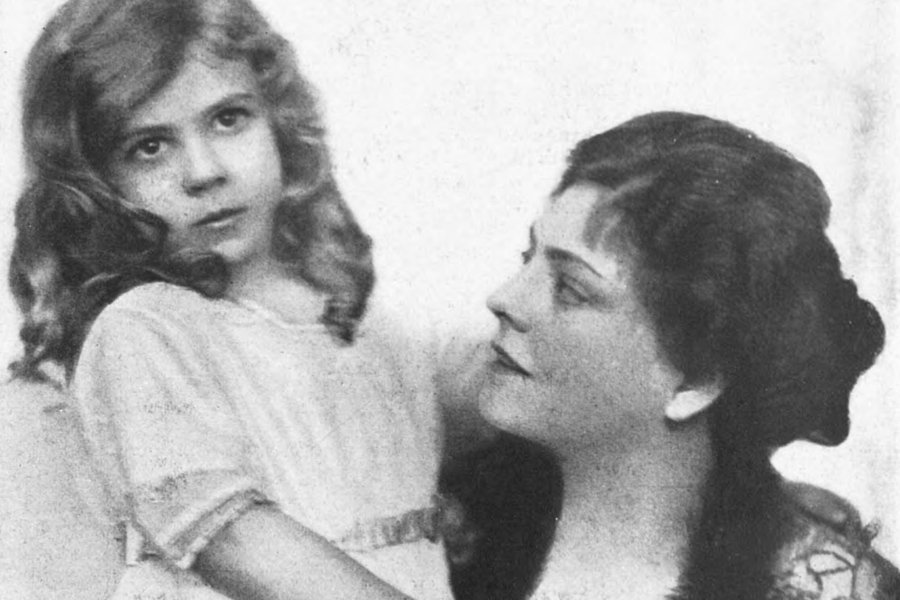
As I explore the annals of American theater, few figures captivate me like Ethel Barrymore Colt. Born into a dynasty that wove drama into its very bloodline, she emerged not just as a performer but as a bridge between generations of stage luminaries. Her story unfolds like a well-rehearsed play, blending triumph, resilience, and the quiet hum of inherited fame. In this piece, I delve into her life, her illustrious family, and the threads that connected them all.
The Barrymore Dynasty: Roots and Branches
I often think of the Barrymore family as a grand oak tree, its roots delving deep into 19th-century soil while branches stretch toward Hollywood’s glittering canopy. Ethel Barrymore Colt stood firmly in that lineage, the ninth generation of performers. Her mother, Ethel Barrymore, born in 1879 and passing in 1959, reigned as the First Lady of the American Theatre. She claimed an Academy Award in 1944 for her role in None But the Lonely Heart, her presence commanding stages, screens, and radio waves alike.
Her father, Russell Griswold Colt, born in 1882 and dying in 1960, brought a different flavor to the mix. A financier from the Colt firearms lineage, he infused the family with industrial wealth. Their union ended in divorce in 1923, amid whispers of turmoil, leaving young Ethel to navigate a fractured home at age 11. Siblings added layers to this familial tapestry: Samuel Peabody Colt, born in 1909 and living until 1986, pursued acting in films and theater; John Drew Colt, born in 1913 and departing in 1975, lingered more in the shadows of the spotlight.
Grandparents enriched the narrative further. Maternal grandfather Maurice Barrymore, originally Herbert Arthur Chamberlayne Blythe from 1849 to 1905, embodied the wandering actor’s spirit. His wife, Georgiana Drew, 1856 to 1893, hailed from the Drew acting clan. On the paternal side, Samuel P. Colt, 1852 to 1921, served as Rhode Island’s Attorney General, blending politics with business acumen, while Elizabeth Mitchelson Bullock anchored the line.
Great-grandparents painted even broader strokes. Louisa Lane Drew, 1820 to 1897, managed theaters like a maestro conducts an orchestra, becoming the matriarch of it all. John Drew Sr., 1827 to 1862, brought Irish flair to American stages. William Edward Blythe connected to the family’s adopted Barrymore name, a nod to theatrical reinvention.
Extended kin included uncles John Barrymore, 1882 to 1942, the legendary Hamlet of his era, and Lionel Barrymore, 1878 to 1954, an Oscar winner whose voice echoed in radio dramas. A cousin once removed, Drew Barrymore, born in 1975, carries the torch into modern cinema, proving the family’s enduring spark.
Personal Bonds: Marriage and Legacy
In my reflections, Ethel’s personal life resembled a quiet interlude amid the family’s dramatic overtures. She married John Romeo Miglietta on December 1, 1944. A business executive, he offered stability until her death. Their son, John Drew Miglietta, born around 1946, inherited not just names but tangible legacies, sharing in the 1960 bequest of Linden Place. This Rhode Island mansion, with its 25 rooms, outbuildings, and 425-acre dairy farm, symbolized the family’s rooted grandeur.
Ethel described family gatherings avoiding shop talk, a deliberate pause in the relentless performance. Her independence shone through, especially post-divorce upbringing. She focused on self-reliance, much like a lone sailor charting stormy seas. This ethos extended to her descendants, including great-grandchildren like Theodora Goujaud Dewolf, who represent the ongoing ripple of her influence.
A Versatile Career: From Stage to Song
Ethel’s career reads like a varied script. Born April 20, 1912, in Mamaroneck, New York, she debuted on Broadway in 1930’s Scarlet Sister Mary as Serraphine with her mother. The blackface part was praised for its authenticity. While touring with George White’s Scandals in 1931, she left due to disagreements.
She struggled in the 1930s. She led Under Glass in 1933 despite an appendectomy at St. Louis Municipal Opera. Her 1934–1939 management saved the Jitney Players from bankruptcy. I see her driving trucks, creating costumes, fundraising, reworking Diplomacy and Rip Van Winkle, and adding original music.
In 1937 and 1938, she wrote lyrics for London Assurance, Orchids Preferred, and Whiteoaks on Broadway. She dropped her middle name to stand alone. She made outfits while performing semi-classical tunes in nightclubs and vaudeville in 1939–1940.
Her soprano voice helped her. She toured Faust, La Boheme, Fedora, and La Traviata after debuting as Micaela in Carmen in 1941. Over 100 shows in the U.S., Canada, and South America. Her 1949 alias Louisa Kinlock, based on great-grandmothers’ names, avoided surname biases. Time magazine introduced her on Orpheus tours in 1949.
Her specialty was solo shows. Songs of the Theater in the 1950s mixed stories and arias; Curtains Up in the 1960s homaged American musicals. First London appearance at Wigmore Hall 1955, Lewisohn Stadium 1957. She commissioned social dramas like family therapy for Plays for Living.
She gave patriotic talks twice a week as a Red Cross nurses’ aide during WWII. Summer drama schools were hosted as artist-in-residence at Salve Regina College in 1966. Returning to Broadway as Christine Crane in 1971’s Follies took eight minutes of tap. The 1975 New York City Opera production of The Daughter of the Regiment and a State Department European tour followed.
Achievements included 18 grand opera performances by 1942, genre mixes, and theater-based societal contributions. She managed loans during Jitney’s crisis and inherited Linden Place in 1960, part of the Barrymore-Colt estate estimated at $88 million in 2025.
Timeline of Milestones
To capture the rhythm of her life, I’ve compiled this table of key events. It highlights the ebb and flow, much like acts in a grand production.
| Year | Event |
|---|---|
| 1912 | Born April 20 in Mamaroneck, New York. |
| 1923 | Parents divorce July 6. |
| 1929 | Graduates Notre Dame Convent with music gold medal. |
| 1930 | Stage debut in Scarlet Sister Mary. |
| 1931-1932 | Tours with George White’s Scandals; leaves over role disputes. |
| 1933 | Roles in St. Louis Municipal Opera; appendectomy; leads in Under Glass. |
| 1934-1939 | Manages Jitney Players through bankruptcy; radio appearances. |
| 1937-1938 | Broadway in London Assurance (writes lyrics), Orchids Preferred, Whiteoaks. |
| 1939-1940 | Nightclub and vaudeville tours. |
| 1941 | Opera debut in Carmen; tours Faust. |
| 1943 | Presents The American Musical Theater of Yesterday; WWII Red Cross roles. |
| 1944 | Marries John Romeo Miglietta December 1; New York opera debut in Martha. |
| 1946 | Son John Drew Miglietta born (approximate). |
| 1949 | Uses Louisa Kinlock alias for Orpheus; revealed by Time. |
| 1950 | In The Heiress; TV Die Fledermaus; launches Songs of the Theater. |
| 1951-1953 | Roles in The Three Musketeers, Let Us Be Gay; La Traviata in Cincinnati. |
| 1954-1955 | Naumburg Orchestral Concerts; London debut. |
| 1957 | Lewisohn Stadium debut. |
| 1960 | Inherits Linden Place; launches Curtains Up. |
| 1966 | Artist-in-residence at Salve Regina College. |
| 1967-1968 | Take It from the Top; A Madrigal of Shakespeare with Peggy Wood. |
| 1971 | Broadway return in Follies. |
| 1973 | Great Moments in American Music. |
| 1975 | The Daughter of the Regiment; State Department tour. |
| 1976 | Send in the Clowns with Dayton Kenley Players. |
| 1977 | Dies May 22 in New York City from cancer at age 65. |
This chronology reveals a life in constant motion, from youthful debuts to seasoned encores.
Recent Echoes and Cultural Footprints
Lately, I’ve noticed Ethel’s legacy resurfacing in tributes. In January 2026, Linden Place hosted a concert honoring her Broadway and opera feats. Social media buzzes with archival photos: a 1951 snapshot with Groucho Marx and Humphrey Bogart, shared widely in 2025; color versions circulating in 2024. Discussions link her to Follies revivals and family histories in Toronto performances from 1942.
Blogs and exhibitions keep her vivid. A 1970s photo with Mabel Mercer appears in Getty collections, while lesser-known sites recount her 1926 social escapades with friends like Peggy Walsh. Her story persists as a testament to blending acting with song, inspiring new generations.
FAQ
Who were Ethel Barrymore Colt’s parents and what were their notable achievements?
Ethel Barrymore, her mother, achieved iconic status in theater, film, and radio, winning an Oscar in 1944. Russell Griswold Colt, her father, excelled as a financier tied to industrial fortunes.
What roles did her siblings play in the family legacy?
Samuel Peabody Colt acted in films and theater until 1986. John Drew Colt, though less prominent, contributed to the family’s narrative until 1975.
How did Ethel Barrymore Colt contribute to theater during World War II?
She served as a Red Cross nurses’ aide and delivered patriotic speeches twice a week, using her platform for morale.
What was unique about her opera career?
She performed under the alias Louisa Kinlock to avoid nepotism, debuting in Carmen in 1941 and delivering over 100 concerts across continents.
How did family inheritance shape her later life?
In 1960, she inherited a quarter of Linden Place, a 25-room mansion with 425 acres, shared with her husband and son, reflecting the family’s enduring wealth.