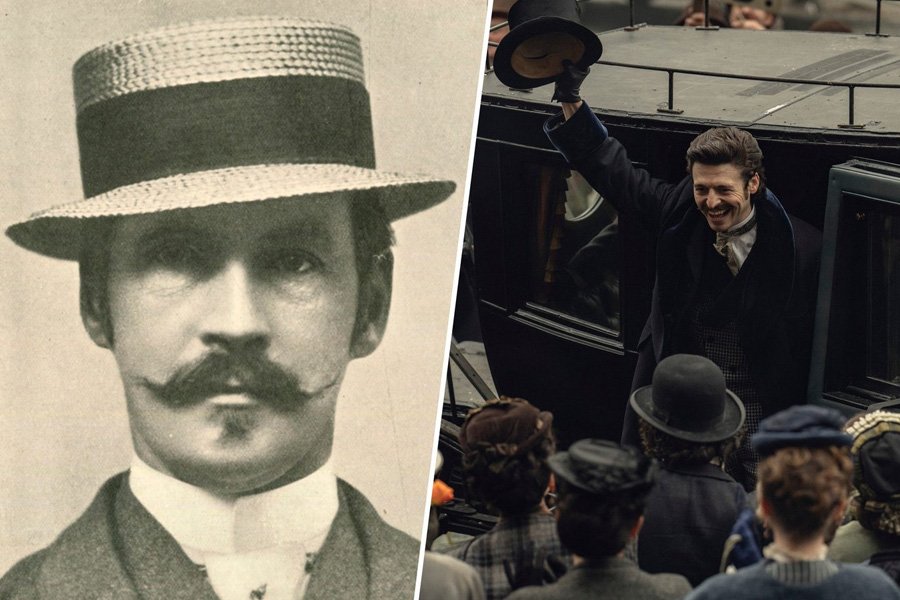
The man behind the name
I think inheritance, discipline, and quiet authority molded Sir Arthur Guinness. He wasn’t the brewery’s obvious founder. Sir Arthur Rundell Guinness, a merchant banker from the Guinness dynasty, was born in Dublin on 26 May 1895. He lived like a river, not a flash flood. It was quiet but heavy.
Business, public duty, and family were intertwined in his family. He experienced turmoil, conflict, commercial movements, and imperial fall in the first part of the 20th century. In that shifting world, he kept one Guinness branch tied to banking and international trade. After transitioning from family to public service, he died on RMS Caronia in Bombay port on March 12, 1951.
Early life and family roots
Arthur was born into the Guinness banking line, not the brewery line, though the two branches were part of the same powerful family landscape. His parents were Howard Rundell Guinness and Mary Alice Guinness. That already tells a story. The name was not a label passed down casually. It was a banner, a family flag, and a business credential all at once.
His mother, Mary Alice Guinness, was herself tied to an older generation of the family. Her parents were Rev. William Newton Guinness and Harriette Frances Day. Through that line, Arthur stood within a wide web of relatives whose names would later echo across marriage records, finance, public life, and aristocratic connections. The Guinness family tree was not a narrow trunk. It was a cathedral of branches.
Arthur also came from a sibling group that helped carry the family name into different fields. His brothers included Henry Samuel Howard Guinness, Edward Douglas Guinness, Frederick Roberts Guinness, and Brian Cecil Guinness. This was a household in which names seemed to arrive already polished, ready for formal records, yet each person moved into a distinct role. The family did not merely exist. It positioned itself.
Marriage and household life
On 5 December 1923, Arthur married Frances Patience Wright. She was the daughter of Edward Fortescue Wright. Their marriage is one of the most important anchors in understanding Arthur’s personal world, because it connected the Guinness line to another family network and created the next generation that would ripple outward into some of the best known elite families in Britain and beyond.
Frances was more than a spouse in the background. She became the center of the family home, the person around whom the next generation formed. Her name remains important because family history is often carried not just by public office holders but by the people who keep the household structure intact. In many aristocratic and banking families, the private sphere is the engine room behind the visible ship.
Children and descendants
Arthur and Frances had three children, each of whom carried the family name into a different future.
Their eldest child was James Edward Alexander Rundell Guinness, born on 23 September 1924. He became a banker and later served in the Royal Navy. He is a key figure because his descendants extend the Guinness line into several prominent modern family branches.
Their daughter was Pamela Patience Guinness, born on 25 September 1925. She married Commander Michael Beauchamp St. John. Through Pamela, Arthur became linked to another branch of the social and aristocratic network that would later connect to the Astors.
Their youngest child was Ivan Douglas Rundell Guinness, born on 27 June 1927. His life was shorter, but his place in the family story remains important. He had a son, Kevin Michael Rundell Guinness, with Mairead FitzGerald. That detail matters because family history is not just about the longest lives. It is about continuities, even when the lines are brief.
I think of this family as a long hall with many doors. Some lead into banking, some into public service, some into marriage alliances, and some into later generations whose names continue to matter on their own.
Grandchildren and wider connections
Arthur connected with a powerful future generation through James Edward Alexander Rundell Guinness. Sabrina, Miranda, Anita Patience, Julia Samuel, and Hugo Arthur Rundell Guinness were born to James and Pauline Vivien Mander.
Sabrina Guinness founded charities and produced TV.
Sabrina’s twin Miranda Vivien Guinness.
Her marriage to Amschel Rothschild linked the Guinness and Rothschild dynasties.
Psychotherapist Julia Samuel counseled children.
Hugo Arthur Rundell Guinness produced painting, illustration, and writing.
Arthur’s descendants spread his family line like stone roots. The same name appeared in television, philanthropy, therapy, art, and high society.
Arthur is related to Rose Astor through Pamela Patience Guinness. Arthur was Rose Astor’s great-grandfather through Clare Pamela St. John. That link puts him at the source of a familial stream that mixed with the Astors.
Arthur is James Rothschild’s great-grandfather through Anita Patience Guinness. This makes his family tree feel almost architectural, with major twentieth century dynasties joining at the upper floors.
Career and public service
Arthur’s professional life was centered on merchant banking. He was part of Guinness Mahon, the family-linked banking business, and became a partner after the London office was reopened in 1923. That detail is important because it places him inside the machinery of international finance during an era when trade and capital were constantly being reshaped.
He was not merely a passive inheritor of a name. He served on the Overseas Trade Development Council in 1944 and 1945, showing that his work extended into national and international economic questions. Then, in 1949, he was appointed KCMG, a recognition of services to overseas trade. The honor shows that his career was seen as more than private banking. It was public-facing, strategic, and tied to wider economic relationships.
I read his career as a bridge. On one side stood family capital and tradition. On the other stood Britain’s trade interests and postwar adjustment. He helped support the crossing.
Personal character and legacy
Arthur’s life feels to me like a finely kept account book. The entries are not noisy, but they are balanced, precise, and consequential. He was born into privilege, but he also occupied a working role within finance and trade. He married into another respected family. He raised children who carried the name into new spheres. He received honors that marked his service. Then he died relatively young, at 55, leaving behind a family that continued to expand in influence.
What stands out is how many modern family lines converge around him. His descendants touch the Guinness, Rothschild, Astor, and Samuel names. In that sense, Arthur is not a historical footnote. He is a hinge. Whole family rooms open from his life.
FAQ
Who was Sir Arthur Guinness?
Sir Arthur Guinness was Sir Arthur Rundell Guinness, born in 1895 and died in 1951. He was a merchant banker from the Guinness banking family and served in trade-related public roles.
Who were Sir Arthur Guinness’s parents?
His parents were Howard Rundell Guinness and Mary Alice Guinness. His mother was the daughter of Rev. William Newton Guinness and Harriette Frances Day.
Who was Sir Arthur Guinness’s wife?
He married Frances Patience Wright on 5 December 1923. She was the daughter of Edward Fortescue Wright.
How many children did Sir Arthur Guinness have?
He had three children: James Edward Alexander Rundell Guinness, Pamela Patience Guinness, and Ivan Douglas Rundell Guinness.
What was Sir Arthur Guinness’s career?
He worked as a merchant banker and partner in Guinness Mahon. He also served on the Overseas Trade Development Council and was later honored with KCMG in 1949.
Why is Sir Arthur Guinness important in family history?
He sits at the center of a large and influential family network. Through his children and grandchildren, his lineage connects to the Rothschild, Astor, and Samuel families, making him a key ancestor in several prominent modern family branches.
When did Sir Arthur Guinness die?
He died on 12 March 1951 aboard RMS Caronia in Bombay harbour.