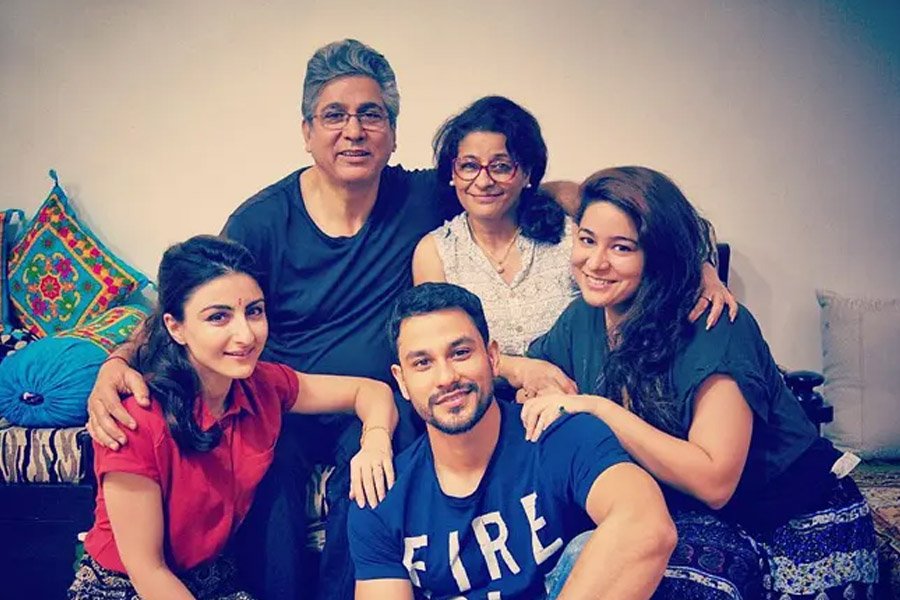
Early life and the curtain call
I have always been drawn to small, human stories hiding behind big public names. In this case the story centers on a woman who lived much of her life in the light that fell on her family rather than on herself. She began in the era of regional theatre and early television, a period when actors learned their craft in rehearsal rooms and on community stages. The late 1980s is a useful anchor; that was the time television serials shaped a generation of performers and influenced where children first stood in front of cameras. The household I know from fragments and family portraits carried that theatrical DNA like an heirloom.
A family woven of performers and writers
This family is woven from stagecraft, scripts, and minor victories. A child actor, Kunal Khemu (born 25 May 1983), carried the family name into films and fame. Ravi Kemmu, her husband, anchored the household with practical theatre love. Family images and memories include Karishma Kemmu, a sister or daughter. An elder, Moti Lal Kemmu, known for theatrical writing and regional respect, molded the family’s culture.
Family circles expand. The son married popular personality Soha Ali Khan and had Inaaya Naumi Kemmu, the youngest visible family member. Birthdays, religious holidays, and candid moments that a magazine would later make into a gallery fill the photo albums.
Life as a mother and a private performer
I see her daily routine as a stage manager: prepare, support, step back, clap. At festivals and premieres, she was often pictured with family, rarely seeking attention. She was not absent from family art. A youngster learned to face the camera from her. She saved scripts, encouraged rehearsals, and let performers test lines like recipes in the kitchen.
She is from a generation that developed talent for two or three decades without public exposure. She possesses the gentle authority of someone who understands acting’s vanity and discipline. I picture her as the steady hand who infused a household full of artists with craft.
Career notes and the era she lived in
Television serials of the late 1980s and early 1990s formed a backdrop. The Doordarshan era shaped many careers. In 1987 and the surrounding years, families involved in regional drama found themselves part of serialized storytelling that reached millions. Political and social changes during the 1990s also affected many households, sometimes prompting relocation and reinvention. For the family I describe, movement from a regional base to a metropolitan area became part of the narrative of opportunity.
Numbers matter when you tell this kind of story. Here are a few dates that anchor the family arc.
| Year | Event |
|---|---|
| 1987 | Television serial era that influenced early family careers |
| 1990s | Period of family relocation and context shifts |
| 25 May 1983 | Birth date of the son who later became a film actor |
| 2015 | Year the son entered a prominent public marriage |
The household economy and public absence of numbers
I must own my knowledge gaps. Bank balances and net worth are unknown to me. Their ledgers are secret. The family operated like many arts families: revenue from projects, projects that come and go, and a household budget that flexed around shoots and rehearsals. Roles, festivals, and magazine images are the legacy. Steadiness and networks are difficult to quantify but equally real.
The granddaughter and the continuity of craft
The presence of a grandchild gives the family a renewed center of gravity. The youngest member appears as a bridge between generations. In family photos she sits on laps, peers at scripts, and becomes a living reason to revisit old songs and scenes. Her existence is an act of continuity. The family rituals that once trained actors now have a new audience. I find that comforting.
How the public sees them and how they live privately
Public perception is a prism. The cameras pick out a smile at a festival or a hand on an actor’s shoulder. The private life, by contrast, is made of small repeated gestures: a shared cup of tea, notes on a script left on a table, a birthday cake with a hastily lit candle. I prefer the private scenes. They reveal character more honestly than red carpets ever can.
FAQ
Who is she in the family?
She is the mother, the unifying presence who taught and steadied the younger generation. She is also a former performer who carried theatrical sensibilities into domestic life.
What roles did she play in public media?
Her public presence is mostly in family photographs and occasional cast lists from older television work. She belongs to a time when actors sometimes worked regionally and were not cataloged in exhaustive filmographies.
Who are the closest family members?
The immediate circle includes her husband, the son who became a film actor, a sister or daughter figure who appears in family photos, an elder playwright who shaped family reputation, a daughter-in-law who is an actress, and a grandchild who connects the family to a new generation.
Are there awards or financial records associated with her name?
I do not have records of awards or public financial disclosures tied specifically to her. Most formal honors in the family are associated with the older generation of writers and with the son’s cinematic work.
What years are key to understanding the family story?
The late 1980s is the cultural starting point. The 1990s marked a period of transition for the family. The son’s birth year, 1983, anchors one generation. The marriage year, 2015, marks a public joining that brought new attention.
Where does the artistic lineage come from?
The household drew on theatre and regional dramatic writing. An elder family member was a noted playwright, and that legacy informed the discipline and respect for language that the family carried into stage and screen.
How private are they today?
Quite private. They appear in festivals and in family galleries. Beyond that the household prefers to keep daily life away from headlines. I respect that choice and find it makes the public moments all the more telling.