Early Years and Inheritance
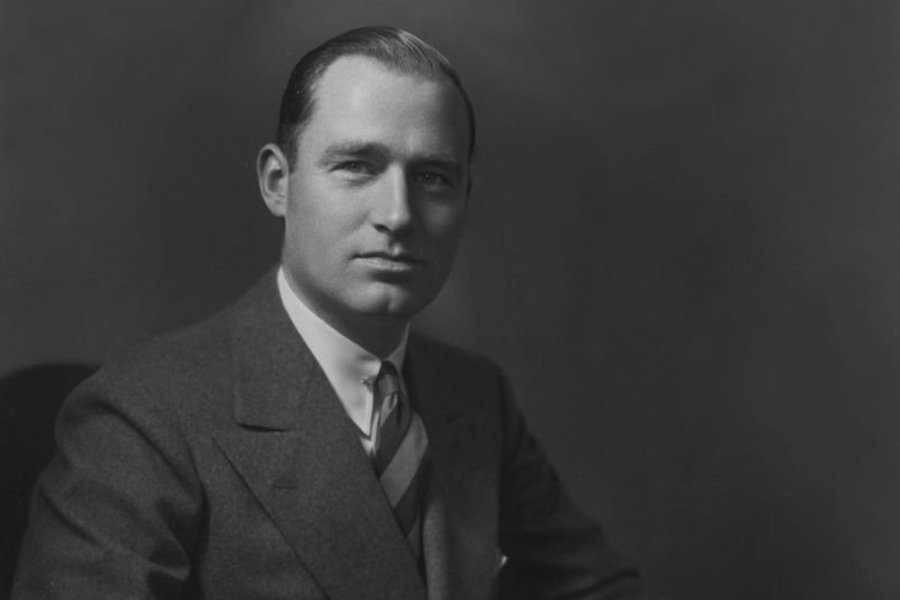
I often think of the Vanderbilt family as a towering oak, its roots sunk deep into America’s industrial soil, branching out with each generation. William Henry Vanderbilt III, born on November 24, 1901, in the bustling heart of New York City, emerged as one such branch. He entered the world amid opulence, the son of Alfred Gwynne Vanderbilt and Ellen “Elsie” French. Tragedy struck early. His father perished aboard the RMS Lusitania in 1915, torpedoed by a German U-boat during World War I. At just 13 years old, young William faced a void that shaped his resilient spirit.
By 1922, upon reaching adulthood, he inherited a staggering $5 million trust fund, equivalent to about $109 million in today’s dollars, along with the sprawling 450-acre Oakland Farm in Rhode Island. This windfall was no mere gift; it carried the weight of expectation from a dynasty built on railroads and shipping. Unlike his ancestors, who amassed fortunes like dragons hoarding gold, William chose paths of service over sheer accumulation. He briefly attended Princeton University but soon traded classrooms for real-world pursuits, enlisting in the U.S. Navy at age 16 in 1917, serving as a midshipman in the Coast Defense Reserve during the Great War.
Family Ties: Parents and Siblings
Diving into his family feels like unraveling a tapestry woven with threads of privilege and heartache. His father, Alfred Gwynne Vanderbilt, born in 1877 and lost at sea in 1915, embodied the adventurous Vanderbilt spirit. A noted horseman and philanthropist, Alfred donated generously to organizations like the YMCA and hospitals. His untimely death left William to navigate inheritance amid grief.
His mother, Ellen “Elsie” French, born in 1879 and passing in 1948, came from a banking family. Their marriage in 1901 ended in divorce by 1908, a split that introduced young William to the complexities of blended families. Elsie remarried Paul Fitzsimons and raised her son at the elegant Harbor View estate in Newport, Rhode Island, a 1865 Italianate mansion that whispered tales of high society.
William’s siblings added layers to this narrative. His half-brother, Alfred Gwynne Vanderbilt Jr., born in 1912 and dying in 1999, became a renowned horse breeder, owning Sagamore Farm and serving on the New York Racing Association board. They shared a bond over transportation interests, echoing their forebears’ legacy. Another half-brother, George Washington Vanderbilt II, born in 1914 and gone by 1961, focused on philanthropy and managing the iconic Biltmore Estate, preserving family properties with quiet dedication. These relationships, forged in shared inheritance challenges, highlighted William’s role as a bridge between generations.
Aunts, Uncles, and Extended Kin
Beyond immediate kin, William’s aunt Gertrude Vanderbilt Whitney stands out like a beacon in the family’s artistic harbor. Born in 1875 and departing in 1942, she was a sculptor and patron who founded the Whitney Museum of American Art. Her influence likely sparked William’s cultural awareness, shifting the family focus from rails to canvases.
On a grander scale, his great-great-grandfather, Cornelius Vanderbilt, born in 1794 and dying in 1877, loomed as the patriarch. This “Commodore” built an empire through railroads, amassing wealth that influenced inheritance patterns down the line, including William’s trust. Such ties reminded me how fortunes ebb and flow, with William’s branch emphasizing duty over dominance.
Marriages and Descendants
Every marriage was a fresh adventure, bringing joy, difficulty, and progress to William’s life. First married Emily O’Neill Davies, granddaughter of a Pittsburgh newspaper magnate, in 1923. One daughter, Emily “Paddy” Vanderbilt, was born in 1925 from this brief marriage, which ended in 1928. Paddy inherited Oakland Farm and pursued family equestrian interests in privacy.
He married Rhode Islander Anne Gordon Colby in 1929. Their 40-year marriage, which ended in 1969, survived health issues that forced William to quit politics for caring. The couple had three kids. Anne Colby Vanderbilt, born in the early 1930s, took her mother’s name and carefully handled family property. In the 1930s, Rhode Island socialite Elsie Vanderbilt prioritized family preservation. William Henry Vanderbilt IV, born about the same time, inherited artifacts such a 2022 Congressional Gold Medal awarded to Vanderbilt University. He avoided public scrutiny by focusing on private business.
William’s third marriage in 1970 to diplomat widow Helen Cummings Cook gave company until his 1981 death. This marriage provided security in his later years, but no children.
Career Milestones and Achievements
Venturing into William’s professional realm reveals a man who traded inherited rails for roads of reform. In 1925, he founded the Automotive Transportation Company, a holding firm for bus and rail lines across New England and New York. This enterprise grew steadily, sold in 1955 and later renamed Bonanza Bus Lines in 1970, showcasing his entrepreneurial flair.
Politics called next. Elected to the Rhode Island State Senate in 1929, he served until 1935, championing fiscal prudence amid the Great Depression. As the 59th Governor of Rhode Island from January 3, 1939, to 1941, he streamlined government by eliminating over 400 jobs and enacting the Civil Service Act, professionalizing state hiring. His bipartisan approach, reappointing Democrats, led to his 1940 electoral defeat by J. Howard McGrath, a lesson in political winds.
Military service bookended his career. After World War I, he rose to Navy Captain in World War II during the 1940s, contributing to the Office of Strategic Services (OSS) in the Pacific and Panama Canal Zone. Post-governorship, he directed the New York Central Railroad board, chaired a 1960 bipartisan committee on campaign finance, and led the U.S. Naval Academy Board of Visitors in 1963. As a Vanderbilt University trustee, he bolstered education, leaving a legacy of efficiency.
Financial Journey
William’s finances painted a portrait of prudent decline from dynastic heights. Starting with that $5 million inheritance, his 1981 estate totaled $1.7 million, a fraction adjusted for inflation. Philanthropy, divorces, and lifestyle eroded the sum, yet no scandals marred his record. He favored steady board incomes over risky ventures, a steady stream rather than a gushing torrent.
| Year | Key Financial Event | Amount (Nominal) | Adjusted (Approx.) |
|---|---|---|---|
| 1922 | Inheritance Received | $5 million | $109 million |
| 1955 | Business Sale | Undisclosed | Profitable growth |
| 1981 | Estate Value at Death | $1.7 million | Modest by standards |
This table underscores how his wealth, once a mighty river, narrowed to a reliable brook.
Later Life and Legacy Reflections
In his later years, William retreated to Williamstown, Massachusetts, battling cancer until April 14, 1981, at age 79. His life, spanning two world wars and economic upheavals, reflected the Vanderbilt evolution from tycoons to public servants.
FAQ
Who were William Henry Vanderbilt III’s parents?
Alfred Gwynne Vanderbilt and Ellen “Elsie” French formed his parental foundation. Alfred, a philanthropist lost on the Lusitania in 1915, and Elsie, who raised him post-1908 divorce, instilled values of resilience and society.
What were his major career achievements?
He founded a transportation company in 1925, served as Rhode Island Governor from 1939 to 1941, and contributed to OSS during World War II. His reforms cut 400 state jobs and introduced civil service standards.
How many children did he have?
Four in total: Emily “Paddy” from his first marriage, and Anne Colby, Elsie, and William Henry IV from his second.
What was his net worth at death?
His estate in 1981 valued at $1.7 million, diminished by giving, separations, and choices.
Did he have any notable military service?
Yes, enlisting at 16 in 1917 for World War I, and as Captain in the 1940s for World War II, including intelligence roles.
Who was his aunt Gertrude Vanderbilt Whitney?
A sculptor born in 1875, she founded the Whitney Museum in 1942, influencing the family’s artistic pivot.